
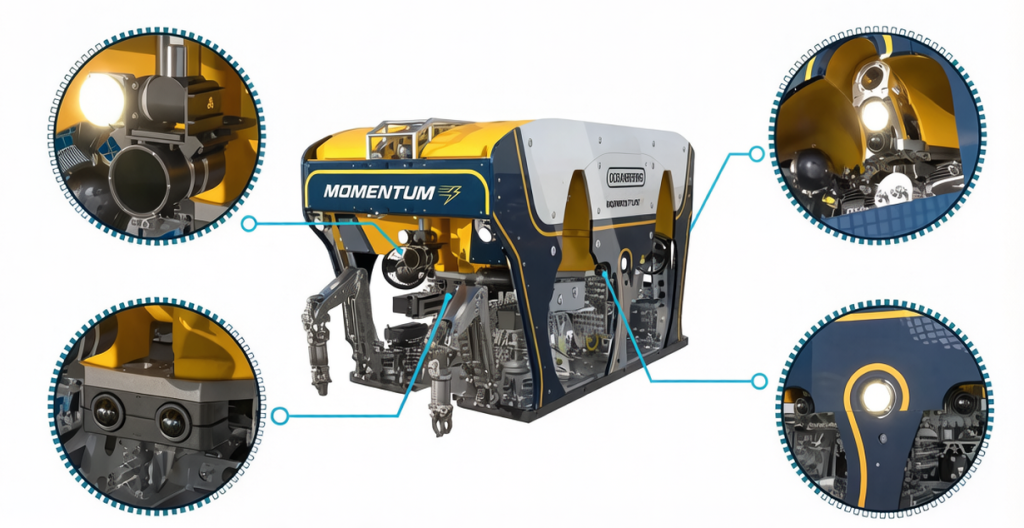
For medium and large underwater Remotely Operated Vehicles (ROVs) navigating unpredictable ocean environments, a reliable underwater ROV camera system is non-negotiable. Standard consumer optical sensors simply cannot handle the extreme pressure, light scattering, and turbidity found at subsea depths.
To maximize operational safety and mission efficiency, offshore operators rely on high-performance industrial imaging configurations. Below is a field-proven underwater ROV camera and lighting strategy designed to balance day-to-day visual coverage with high-end automated scalability.
Standard Configuration: Full Situational Awareness
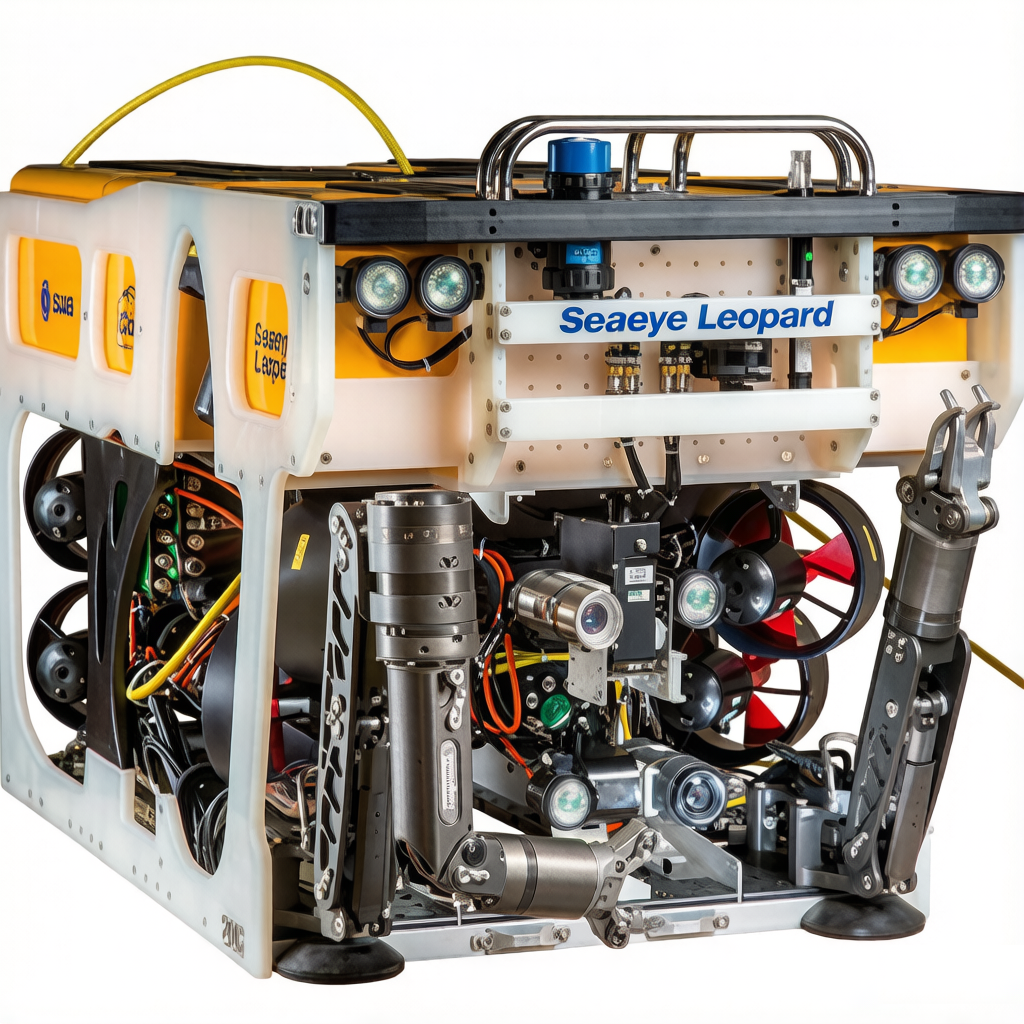
Relying on a single sensor creates dangerous blind spots during complex subsea tasks. The industry-standard underwater ROV camera array uses a "1 Zoom + 4 Fixed" configuration to deliver 360-degree situational awareness:
Primary Optical Zoom Camera (1x): Mounted at the front, a high-definition zoom camera (such as a Sony optical sensor) serves as the main driver for long-range inspection, fine crack detection, and high-precision monitoring.
Fixed Monocular Cameras (4x): Strategically placed around the ROV frame to cover secondary blind spots:
- Manipulator Arm View: Monitors claw engagement and tool handling.
- Rear View: Ensures safe maneuvering when backing out of tight structures.
- Tether & Cable Management: Tracks umbilical line clearance to prevent snagging.
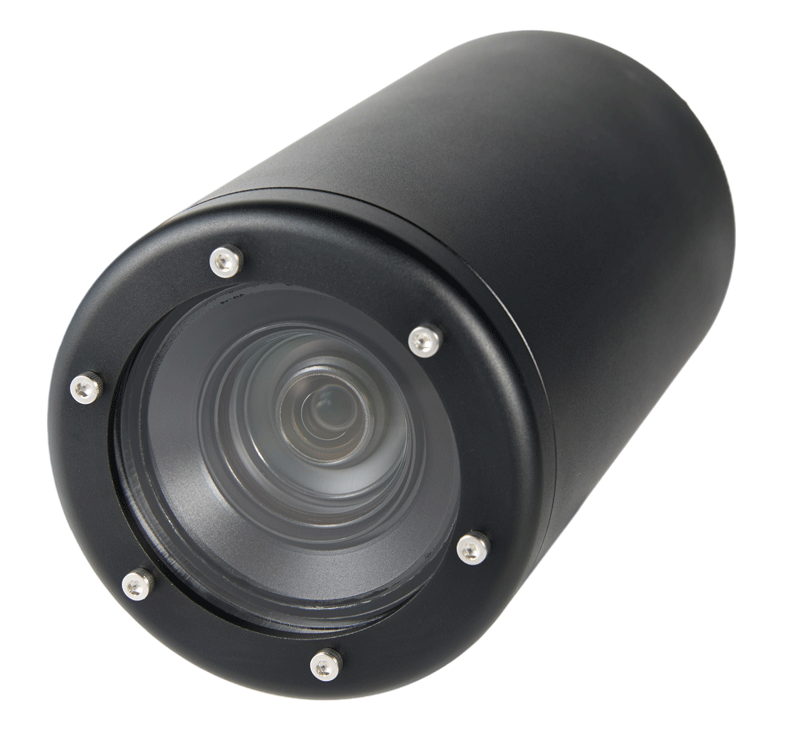

Lighting Strategy: The "One Camera, One Light" Principle
Because seawater rapidly absorbs and scatters light, even the most sensitive underwater ROV camera requires dedicated, strategically positioned illumination to capture usable footage.
To avoid backscatter and harsh shadows, follow the "One Camera, One Light" framework:
High-Power Spotlights (2x): Paired directly with the primary forward zoom camera, these deep-penetration spotlight beams cut through murky, high-turbidity water to identify targets from a distance.
Wide-Angle Floodlights (9x):
- Front-facing (x4-6): Positioned around the front cage to deliver broad, uniform light that eliminates glare during close-range inspection and manipulation.
- Peripheral Support: (3–5x): Dedicated floodlights angled directly at the rear, umbilical tether, and manipulator workspace to match each monocular camera's field of view.
This setup ensures high-brightness, low-glare visibility across all operational angles.
Advanced Upgrade: Intelligent Stereo Vision
For missions demanding higher autonomy, structural mapping, or subsea manipulation without constant pilot intervention, upgrade your underwater ROV camera setup with Trinocular Stereo Vision.
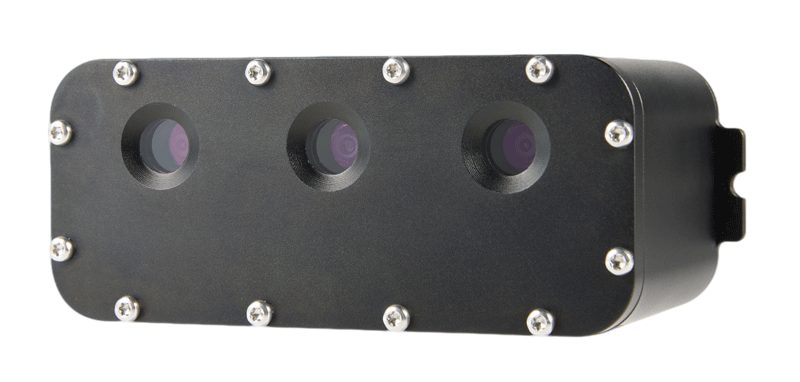

Integrating multi-lens stereo vision enables the ROV to calculate depth, map complex 3D environments, and execute automated tasks—transforming standard remote vehicles into autonomous underwater platforms.
Summary: Technical Specifications
| Component | Standard Package | Purpose & Field Benefit |
|---|---|---|
| Primary Camera | 1x Sony Optical Zoom | Long-range inspection & detailed defect analysis |
| Peripheral Cameras | 4x Fixed Monocular | Tether tracking, manipulator oversight & rear safety |
| Penetration Lighting | 2x High-Power Spotlights | Deep-water penetration aligned with main zoom |
| Wide Lighting | 9x High-Lumen Floodlights | Multi-angle, glare-free coverage for peripheral cameras |
| Autonomous Upgrade | Trinocular Stereo Module | Real-time 3D depth perception & spatial positioning |
By combining a multi-camera array with dedicated point-to-point lighting, this optimized underwater ROV camera configuration improves subsea visual accuracy, protects critical assets, and drastically cuts down task completion times in deepwater environments.